
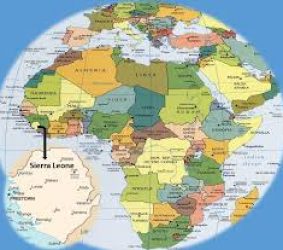
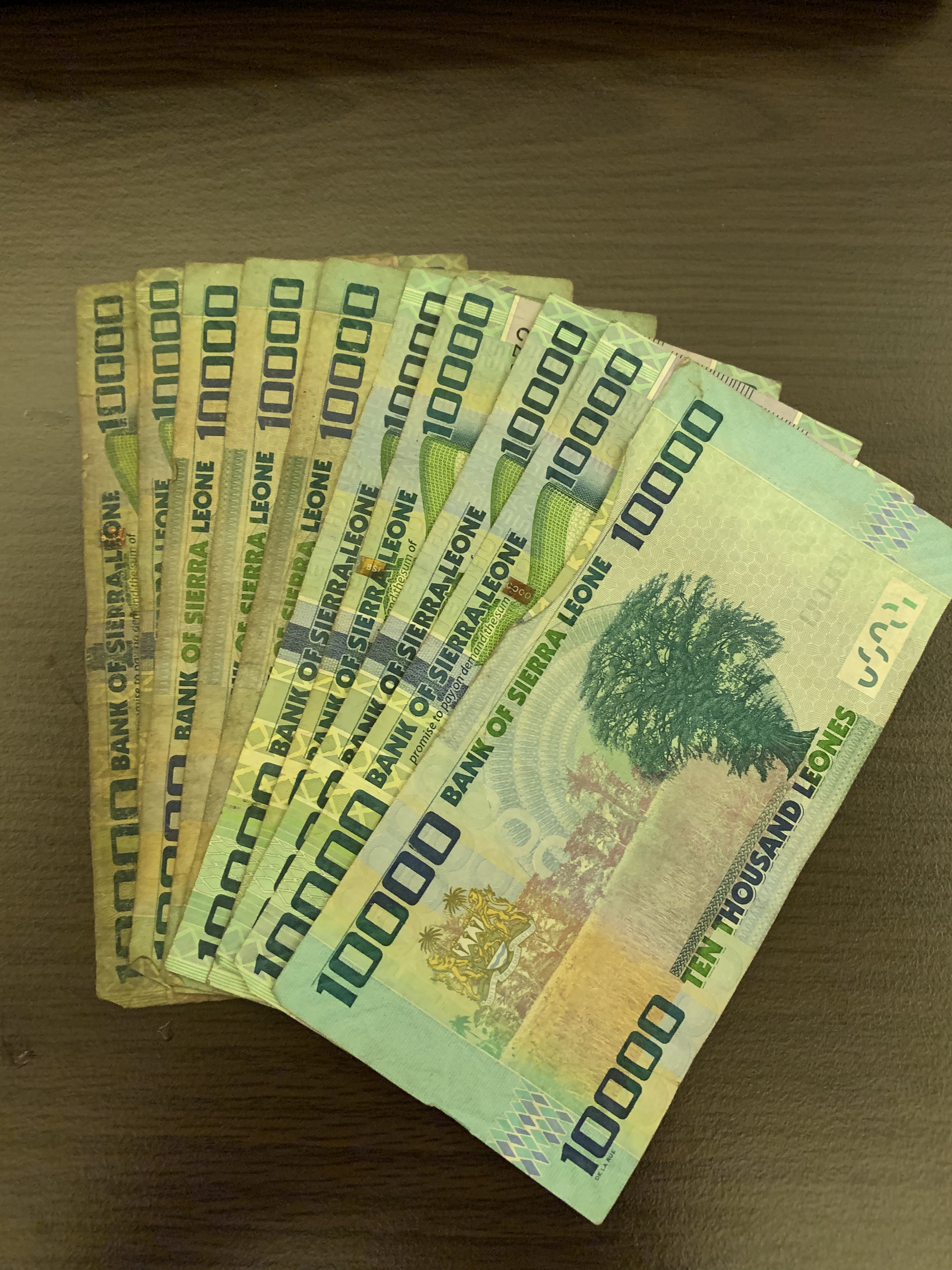
The exchange rate is Le8390 to US $1. Last week I asked the hotel front desk about exchanging money. They offered to call someone and let me know when he arrived in the lobby. He offered a rate of Le8900 to the dollar. According to people at the office, Le8500 to 8600 was a good rate so this was very good. To exchange $100, he counted out 89 Le10,000 which is quite a stack of bills. Le10,000 is the highest denomination and worth about $1.20.
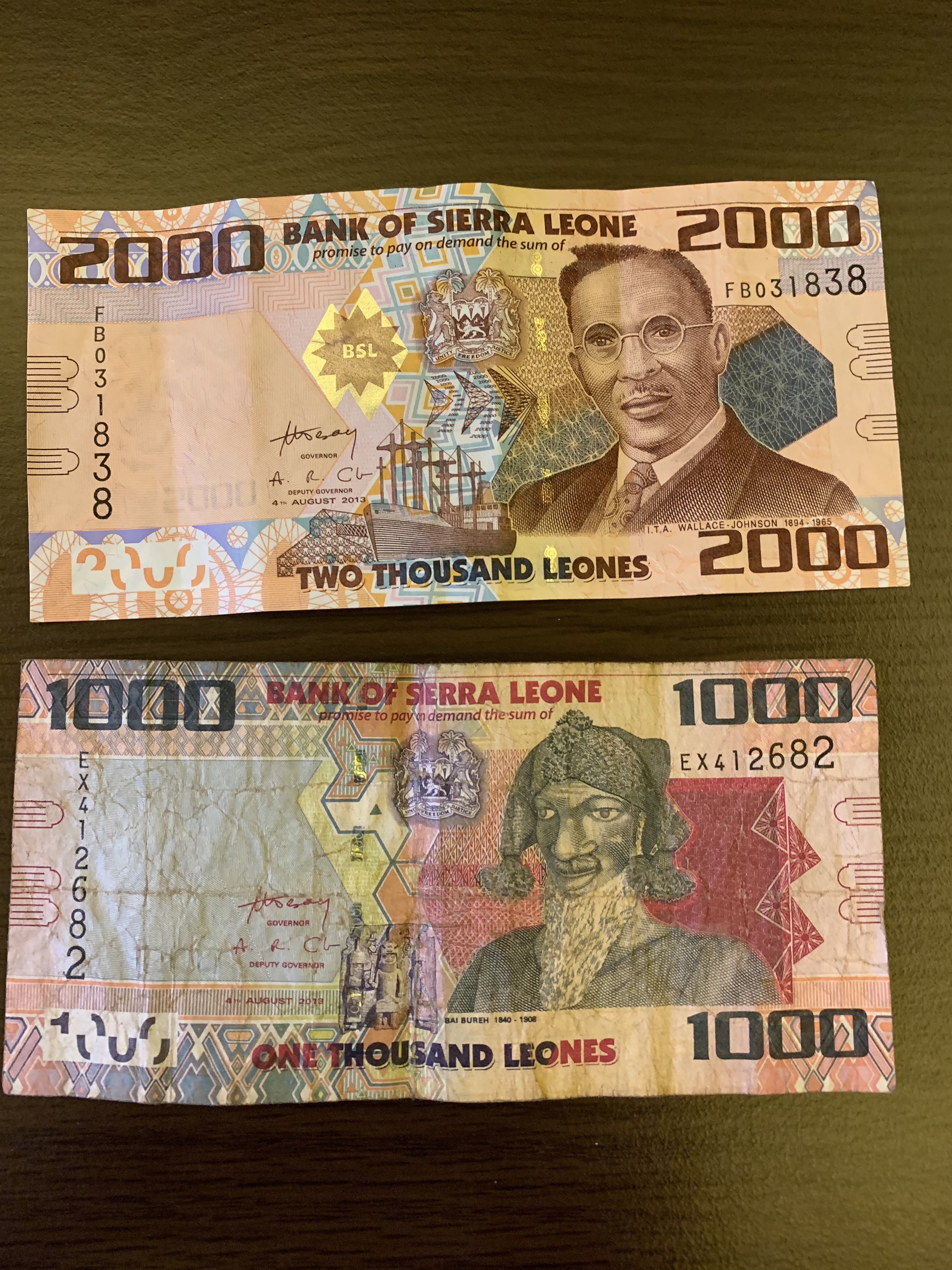
There are also Le5000, 2000 and 1000. I don’t have a Le5000 bill at the moment. Supposedly there are coins but I’ve never seem them used.
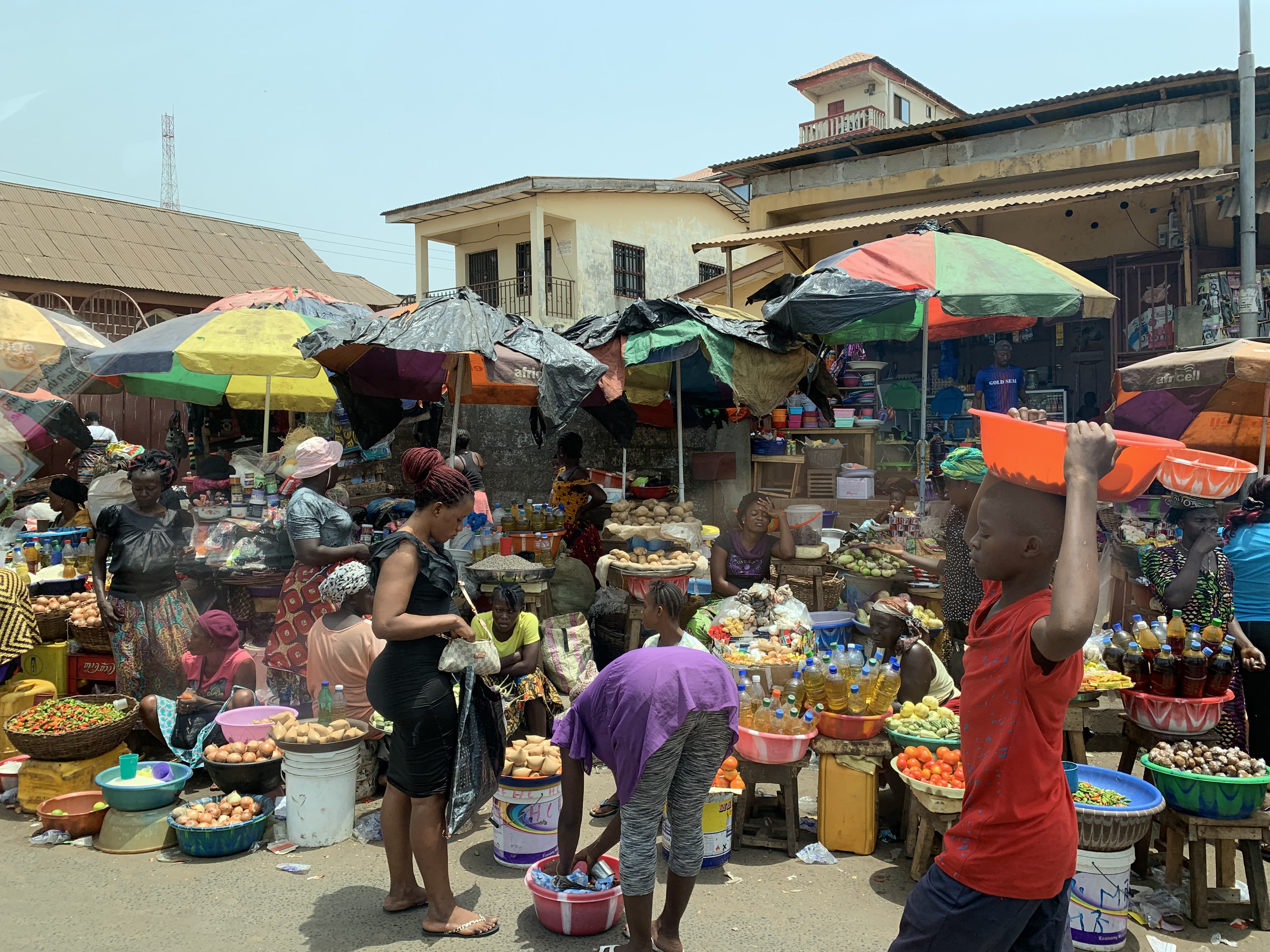
Local food is quite inexpensive – Le8000 for a half kilo of carrots, for example. Imported food like cheese is quite a bit more, often over Le100,000. It’s difficult to feel comfortable spending that much for cheese. Somehow 100,000 seems like a lot even if it isn’t. Also, it’s hard to carry enough cash.
The man pictured on the Le1000 bill is Bai Bureh, the chief of Northern Sierra Leone and the leader of the Hut Tax War against the British in 1898. The man on the Le2000 bill is Isaac Theophilus Akunna Wallace-Johnson (!). He was a unionist, activist and politician in the 1930’s until the mid-60’s. He worked to create unions, increase wages and improve working conditions, especially in the mines. Both men have interesting stories.
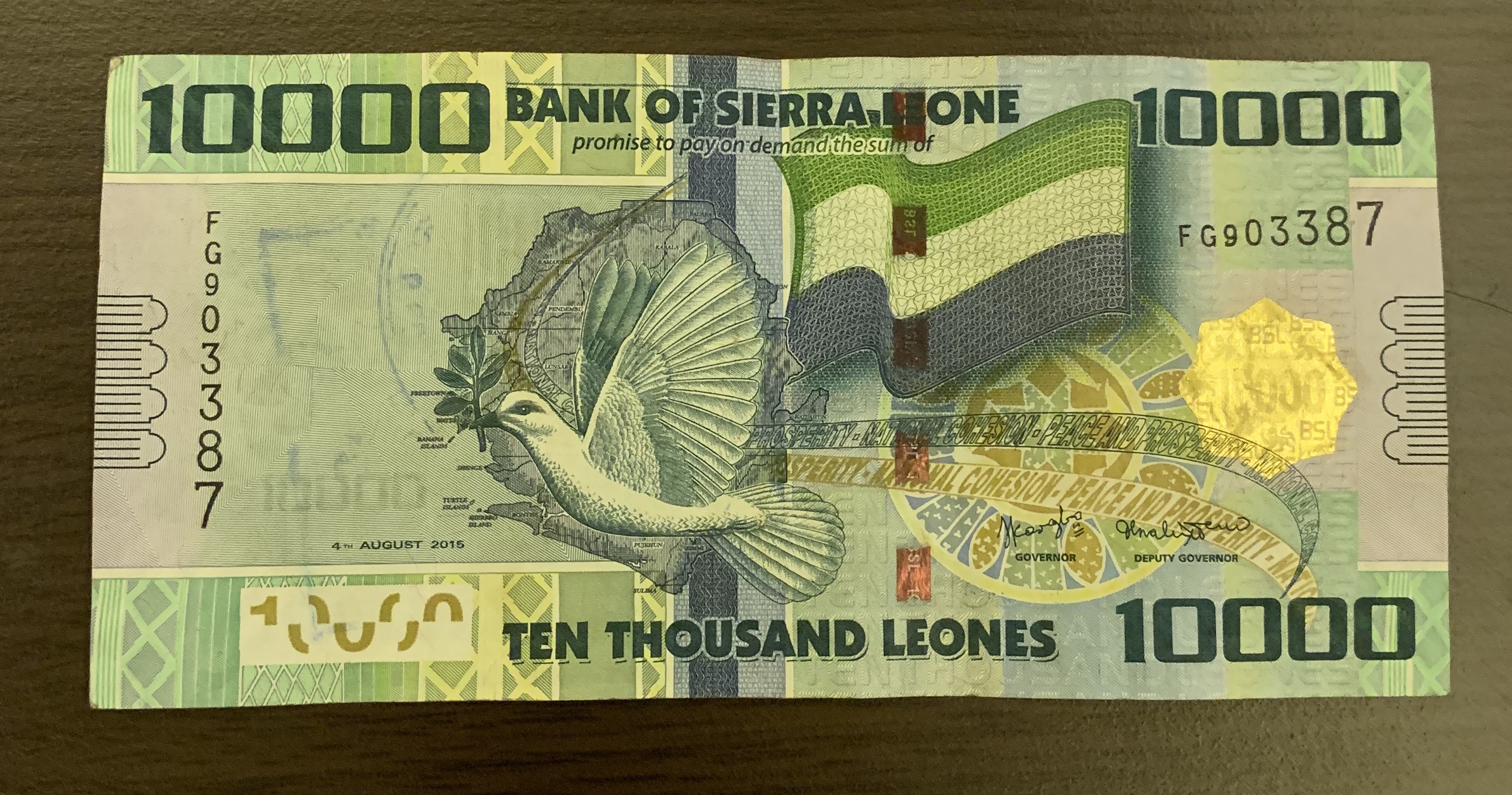
The front of the Le10,000 shown below and first issued in 2010 depicts a dove with an olive branch and banner saying National Cohesion, Peace and Prosperity. The story of 11 year civil war ending in 1999 is the saddest thing I’ve ever read. I can understand why peace would be important to celebrate. The reverse of the bill shown in the top picture above shows the “Cotton Tree”, a landmark marking the spot where freed African American slaves founded Freetown in 1792. They had gained freedom by fighting for the British during the Revolutionary War.
I was going to stop there, but decided to also check out the Le5000 and it’s too interesting not to share. The man on the Le5000 is Sengbe Pieh, or Joseph Cinque. He led the revolt on the Spanish slave ship, La Amistad. If being captured, sold into slavery, shipped across the ocean, leading a revolt and taking over the ship, getting captured by the US and charged with mutiny wasn’t enough, the whole thing turned into a US Supreme Court case. Ultimately the court ruled that the mutiny was justified since they had been kidnapped and sold illegally (the slave trade was illegal by this point in history) and he and the others were assisted in returning to Sierra Leone in 1842.


















 Jill’s Adventure in Sierra Leone