
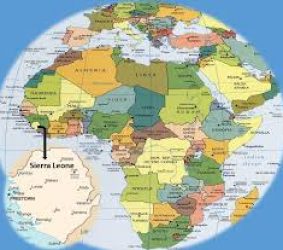
I’m sitting on the porch of the guest house in Kabala. It is 8:30 in the morning on Cleaning Saturday so I can hear the sounds of sweeping far and wide and smell smoke from trash burning. Until noon on the first Saturday of the month across the country, everyone is mandated to clean. No one is allowed out except to clean the streets. Large trucks will come through later to pick up piles of trash. Of course, as with everything, there are exceptions. We will be able to return to Freetown this morning because our vehicle has diplomatic plates. We are delaying our departure until 10:30 so we can buy produce on the way. It won’t be out for sale until after noon.
I will post this blog later since there is no WiFi here. Actually, there is no electricity except from 7-11pm. There was water from the sink tap and toilet this time since there have been some rains, but no water for the shower. I did get a thermos of hot water to add to the bucket of water this morning so bathing was much more pleasant. Breakfast is a spicy “omelette” with bread.
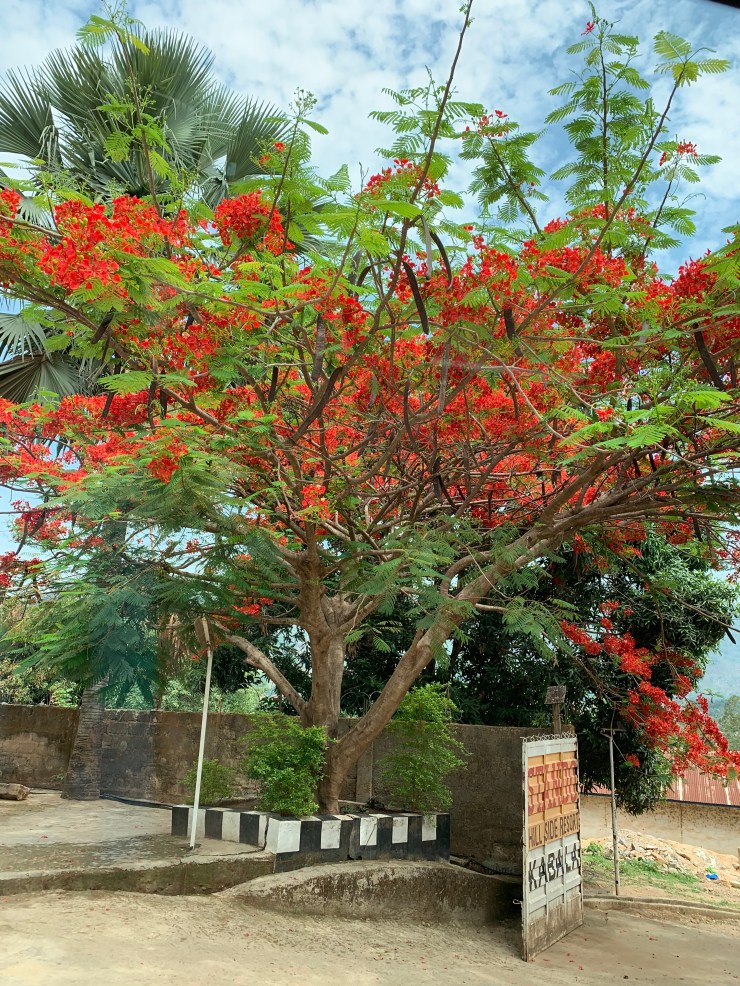
Since I was here 2 weeks ago, it has become greener. Flowering trees have burst into bloom. And this is just the beginning of the rains. Mosquitoes have multiplied. Ruts and potholes have grown. It will rain more and more each week until the height of the rainy season in July and August. They say that there are fewer mosquitoes in the rainy season because there is no standing water. It was so hot and dry and smoky last time I was here, it was difficult to imagine it could be different. Now I have a glimpse of how things can grow.
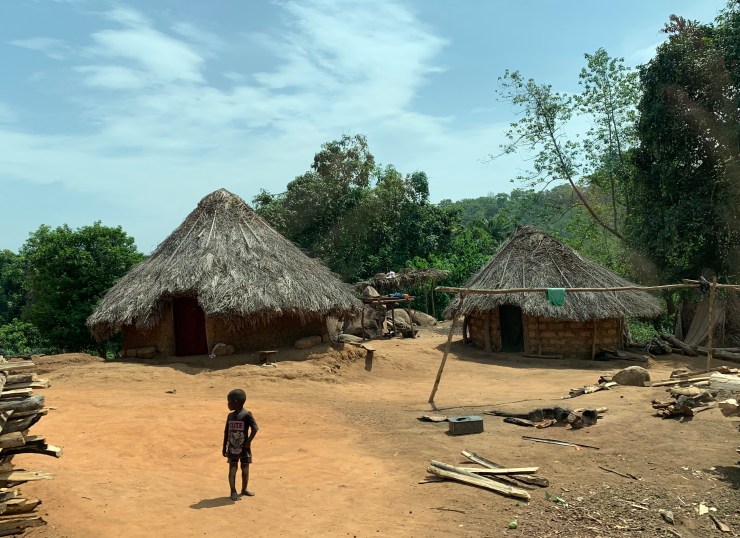
On Thursday, I visited another village as part of the investigation. This village was north of Kabala on the “main” road to the Guinea border. Actually the pavement – any pavement ends – in Kabala. Even the road from Makeni to Kabala is narrower and barely paved in spots with car-eating potholes. The village is mainly Fula. Fula are known for trade and cattle-raising. Their villages are notable for small, tidy, round houses with thatched roofs. They are also known to live all over – not in any particular region – and to be relatively wealthier because of the cattle and trade. Fula are often the money changers in Freetown. They are the one ethnic group I can almost recognize because of their small frames and narrow faces.
On the drive back, I was entertained by a discussion of common characteristics of ethnic tribal groups. For example, Limba are known for producing and dealing in palm wine (we saw many motor bikes loaded with containers of palm wine on the way into Kabala). Fula are known for drinking it. All this was said with a lot of laughter since it was the Kissi guy saying it when the other guy in the car is Limba. He said Limba are also known for being quiet and living on the edge of towns. Limba wives are the best, according to the two of them, because they are hard working and peaceful. Temne, on the other hand, watch out. They are always fighting. I do not think anyone in the car was Temne. When I asked what people say about Kissi people, the Kissi person in the car said they are known for being fun and liking to be in the middle of things. When pressed for specifics, he said they eat locusts – they consider them medicinal.
The main village where we are conducting the investigation is Limba. As part of the investigation, I learned more details about what people eat in the village. The variety of cultivated and wild foods is really astonishing. Keeping everyone well fed throughout the year can still be challenging. The village is supplementing its diet with bush meat (yes, this includes monkeys) and foraged foods like bush yam, locusts, and black tambla. They buy some imported rice since they are now using the hillsides to plant spicy peppers instead of upland rice. Peppers can be sold for cash and was the source the income used to build some of the newer houses I saw.
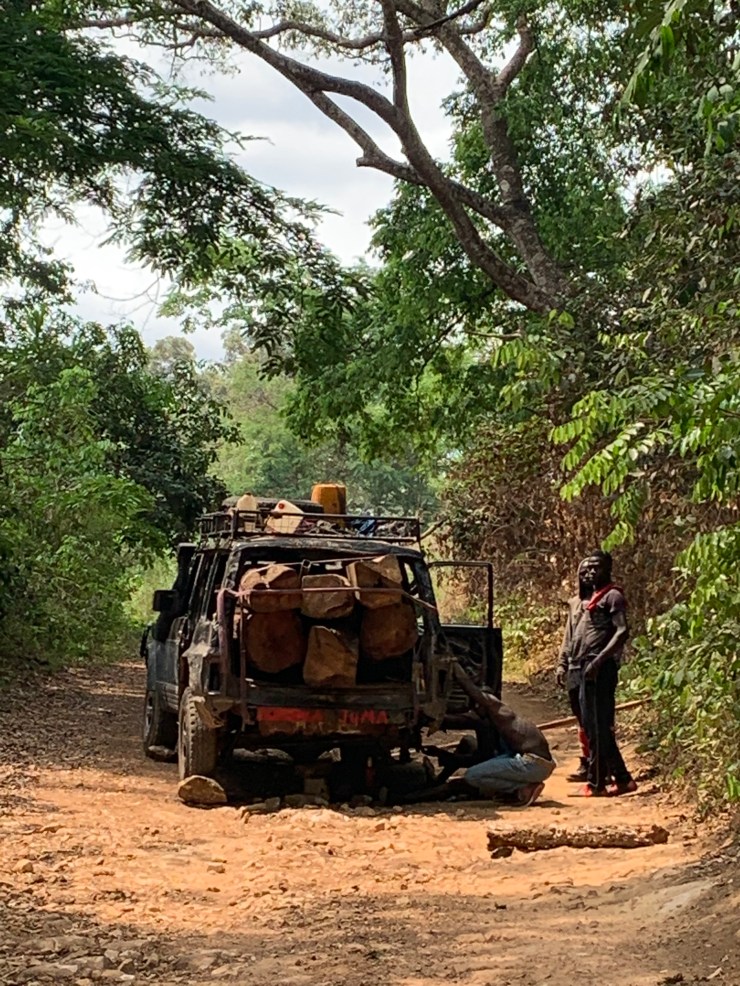
The other source of income was timber. While we were there, we were surprised to see a SUV zoom through the village. We have been parking at the bottom of a supposedly impassable hill. It was a timber truck going through to collect logs. Later I heard the driver was smoking with one hand and swigging rum with the other. These guys really live on the edge. Below is a previous picture of a typical timber truck – doors and windows removed.
On the way back to Freetown, we shopped for produce – cheaper and fresher than what you can buy in town. When you stop by mango vendors, there is a mad rush to your car. These taxis and buses will go back to Freetown loaded down with mangoes.
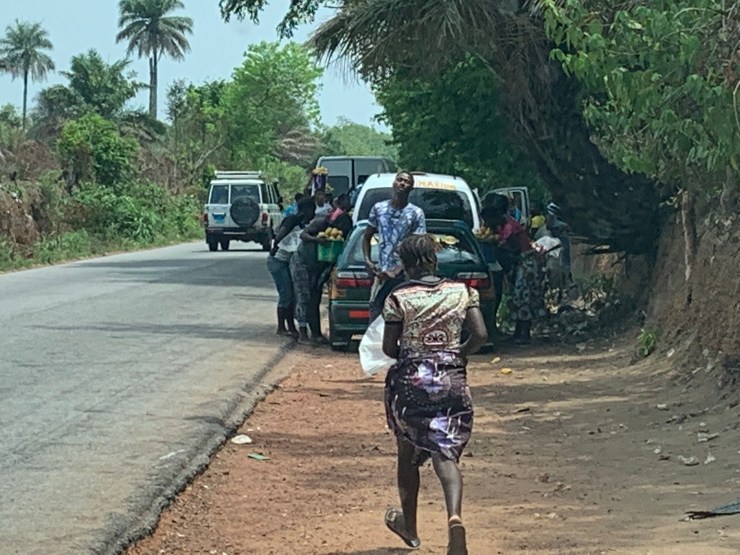
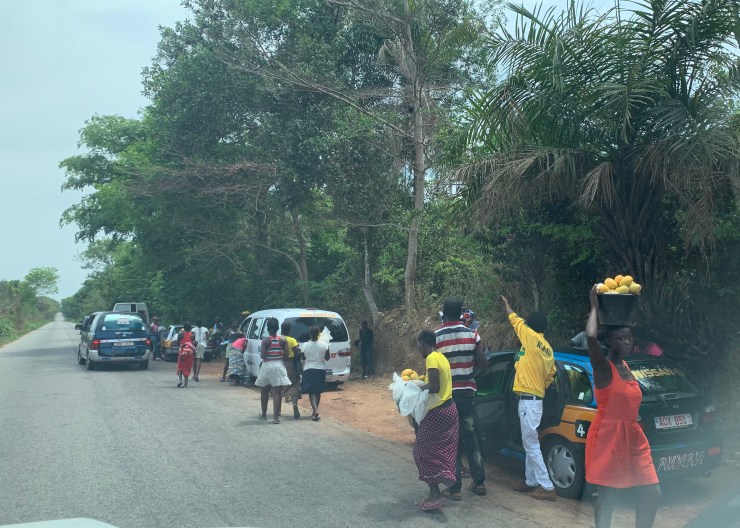
We also bought yams, cucumber, pineapple, plantains, and avocados.
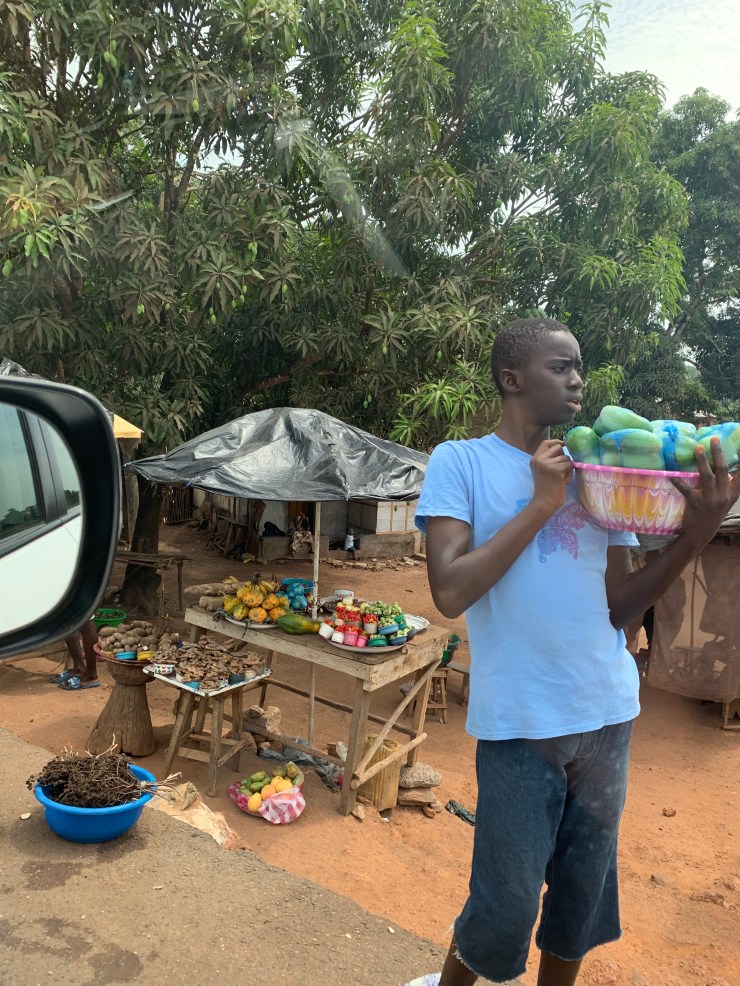
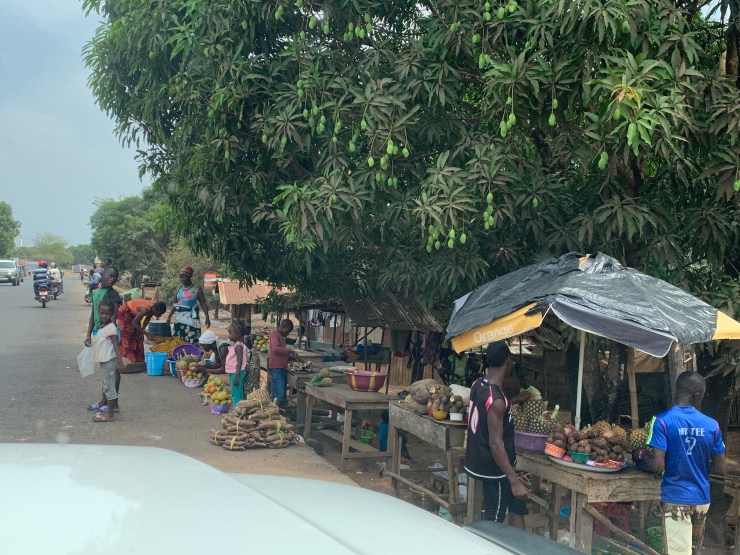
Sadly, delaying our trip to buy produce brought us into Freetown in time to get stuck in road construction traffic for 2.5 hours. Was it worth it? Now that I’m eating mangoes and pineapple everyday, I’d say yes.
 Jill’s Adventure in Sierra Leone
So beautiful Jill!! I love the image of you eating mangos and pineapple in rush hour traffic across the world from us .
You are living the life . I am so happy for your adventures .
Here we were enjoying 70 degree weather sitting in our backyard smelling the lilacs last weekend and woke up to snow today . So typical spring in Santa Fe !!
Happy mother’s day weekend !!!
I’m going to las cruces tomorrow to visit my mama for the weekend .
LikeLike