
While in the north, I had a chance to visit some local craftspeople and see them working. In Kabala, I visited a housing area established for wounded survivors of the civil war. I two weavers of country cloth. The first, a woman, lost her whole village. She survived by crawling under dead bodies as everyone was shot. She was shot through the chest but survived and somehow crawled and walked until she could get help.
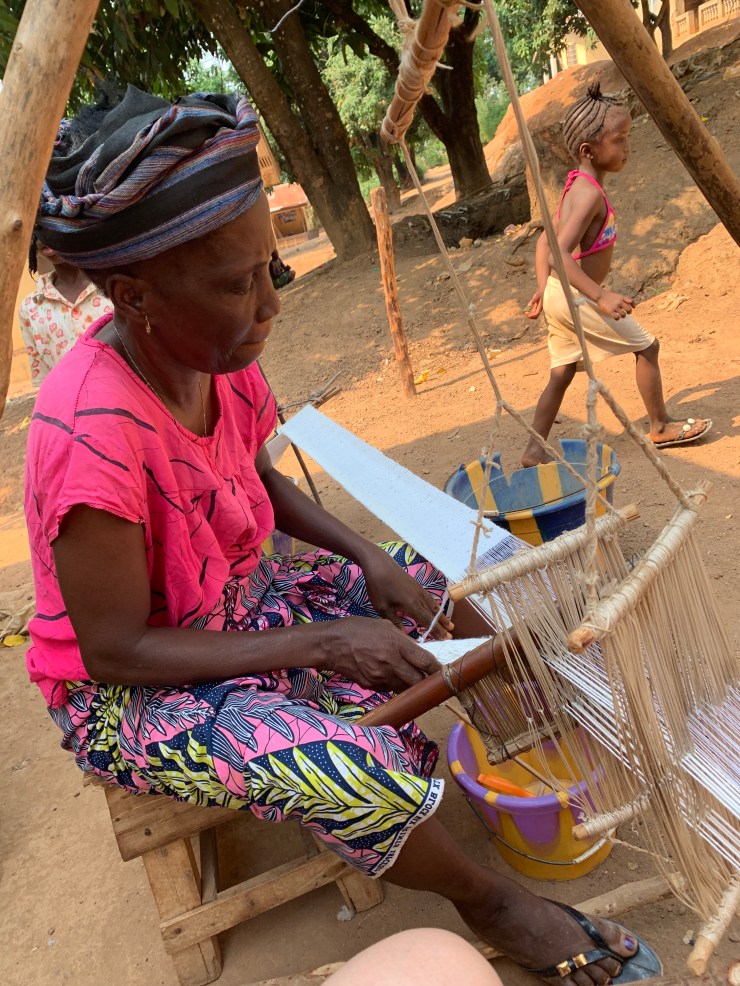
Country cloth is traditionally of cotton woven in narrow strips and sewn together into clothing or blankets. She uses her foot to work 2 pedals to alternate in pulling down the heddles. I just started weaving lessons today so am practicing the terminology.
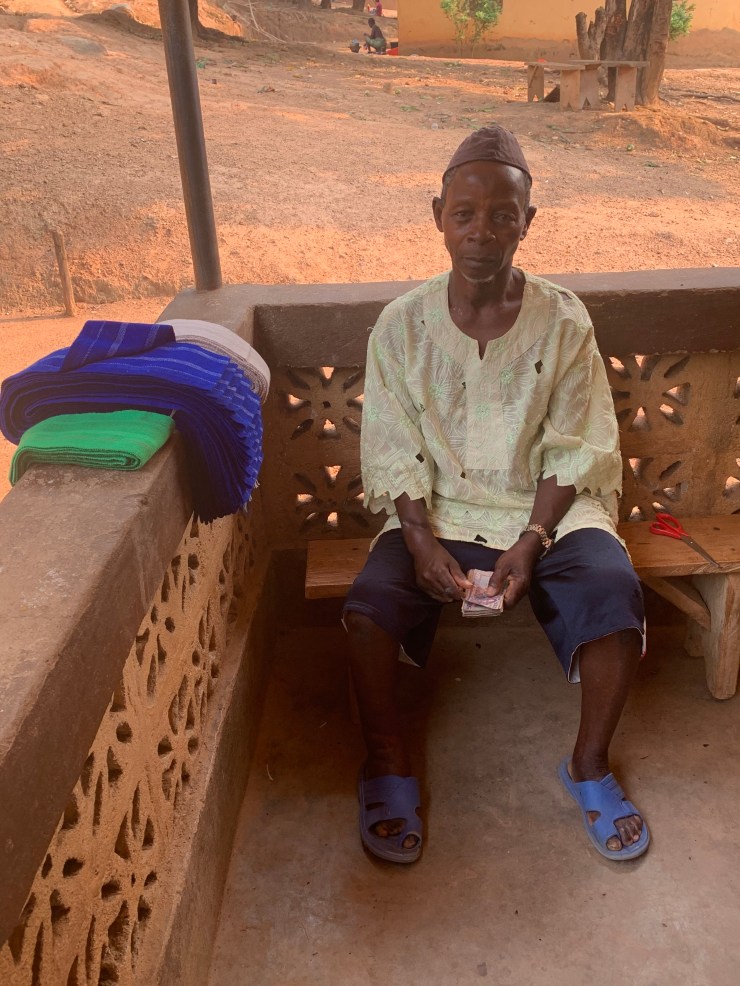
The second weaver was hacked with a panga (machete) and has permanent damage to his right arm and right foot. He is unable to move the fingers on his right hand despite multiple operations. His cloth is laying on the wall next to him. He’s holding money because I just bought some of his cloth. He looks sad because he is. He says it is hard to not be able to take care of his family.
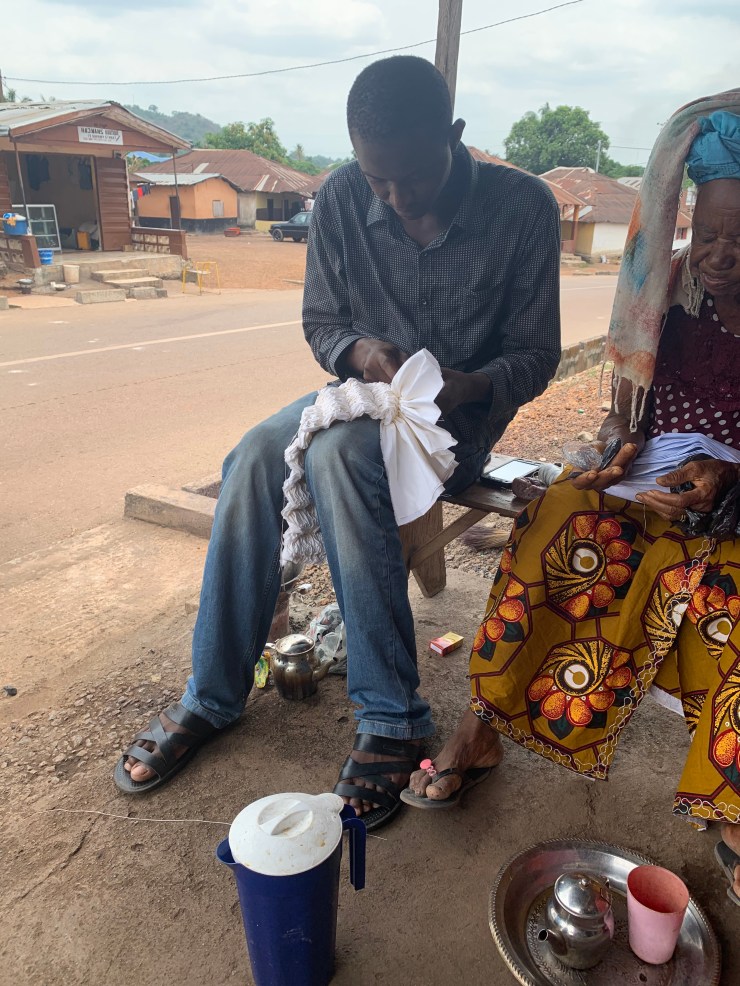
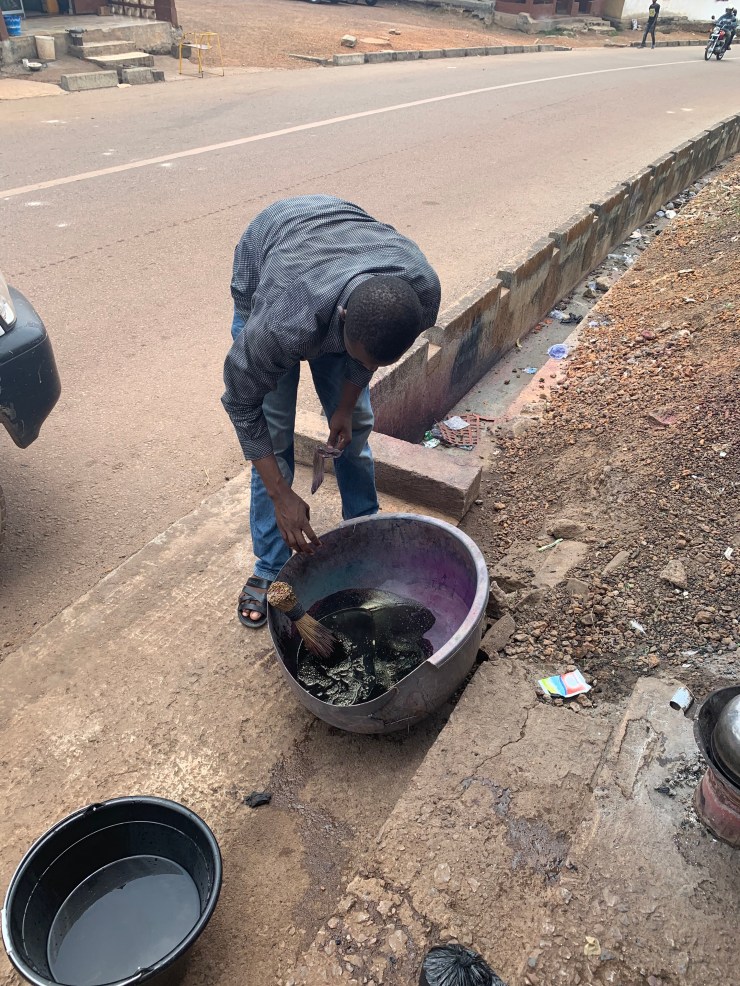
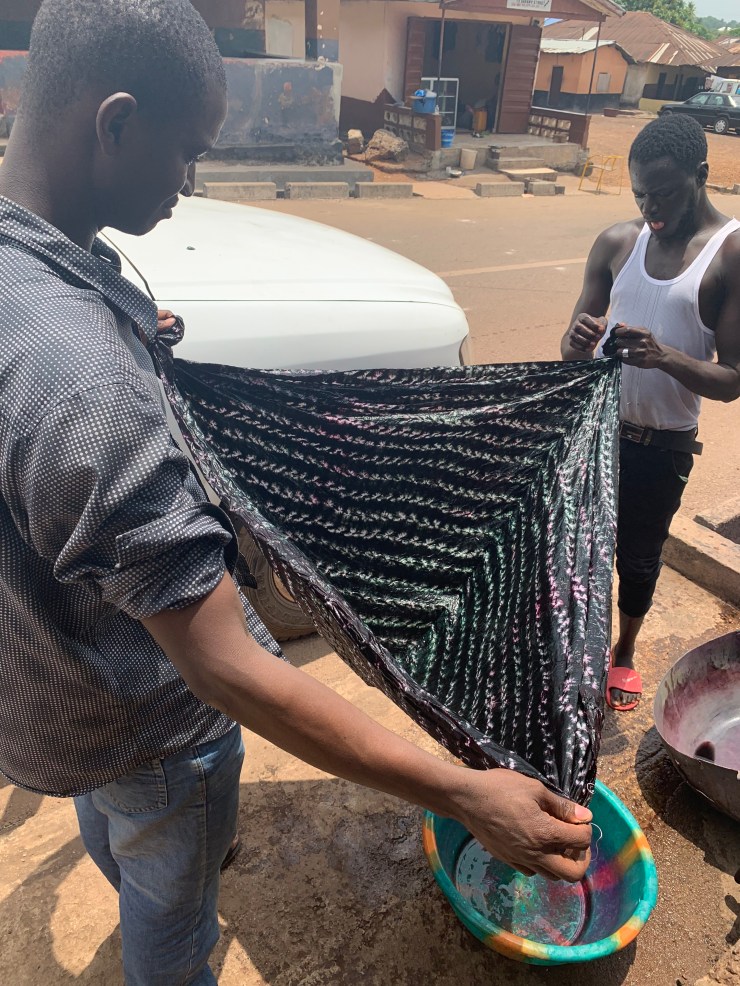
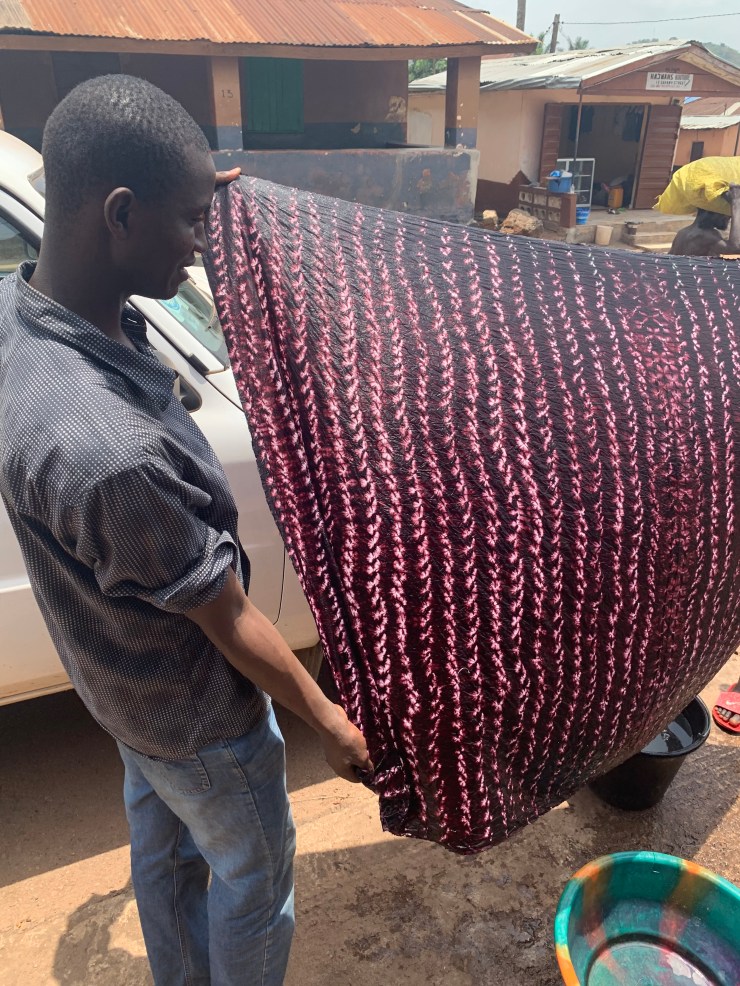
Makeni is known for gara cloth which is tie-dyed. Most of the people that make gara cloth are Mandingo. The traditional dye used is made from kola nuts but most people use commercial dyes. First he sewed the cloth together, then dyed it. It smelled awful. When it first came out it was greenish and then turned maroon in the sun.
After it had dried in the sun, we went to get it waxed. This makes it shiny and better according to everyone. We walked a short way up the road behind a house to a shed where we could hear rhythmic beating noises. Inside two guys were beating cloth with large mallets in such harmony they moved like one person. First they sprinkled the cloth with a bit of water and let it sit. Then they rubbed some candle wax on it and on the wooden mallets. Then they would beat it all over, refold, and beat some more until the wax was fully distributed and the cloth smooth and shiny in a tidy folded bundle.
All the while they are moving the cloth and keeping the rhythm without ever smashing each other’s fingers. The rhythm had a regular hitch in it when they switched the mallet from one hand to another. And they were sweating like crazy – just pouring of of them. It was stifling hot in the little shed. They were listening to the radio, beating cloth, pausing briefly to wipe off sweat and drink water, and then would continue beating cloth. Look at the size of the mallets! I have to say that they appeared to be extremely fit.
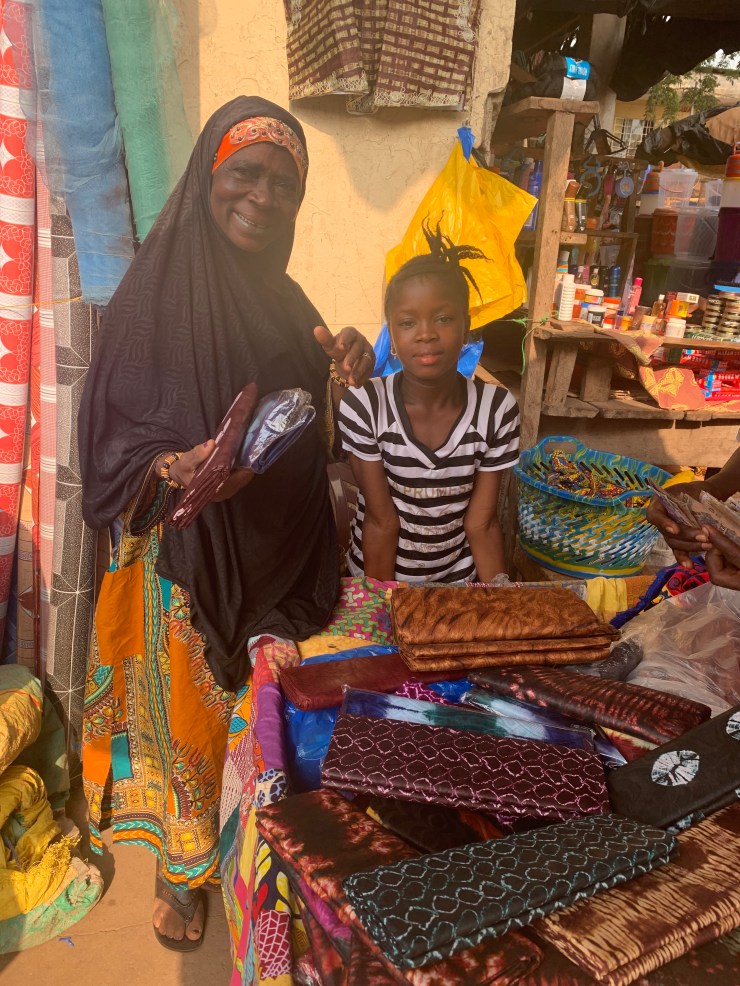
I bought some more gara cloth at the market including some with the traditional kola nut dye. It’s the chestnut brown cloth on top.
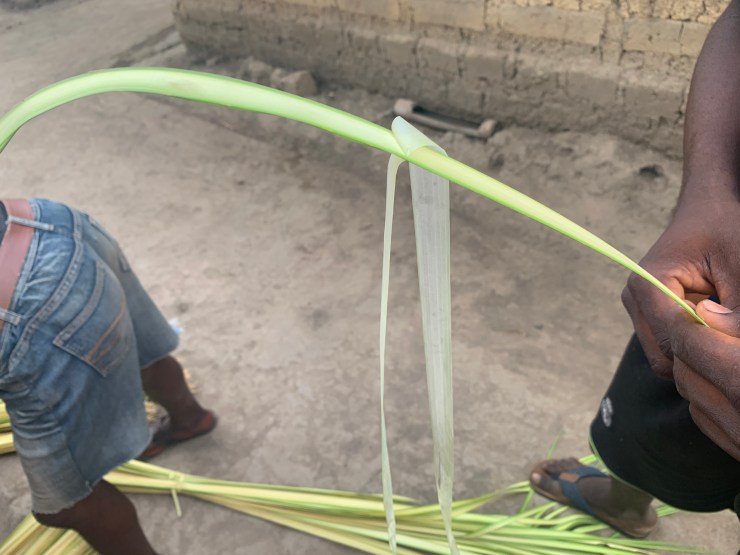
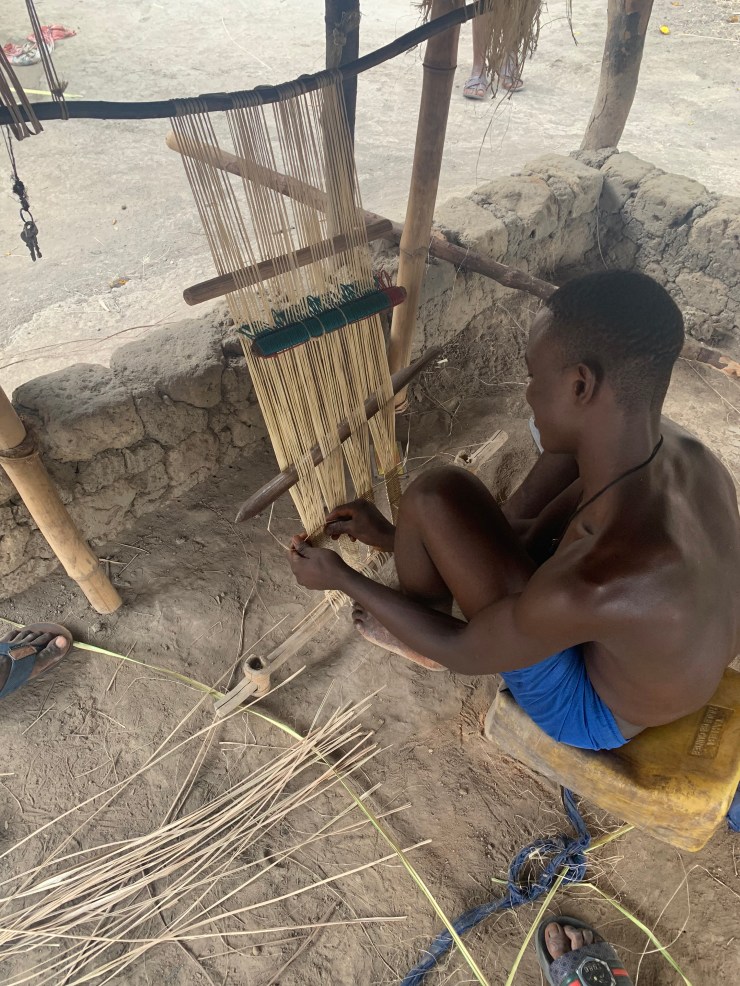
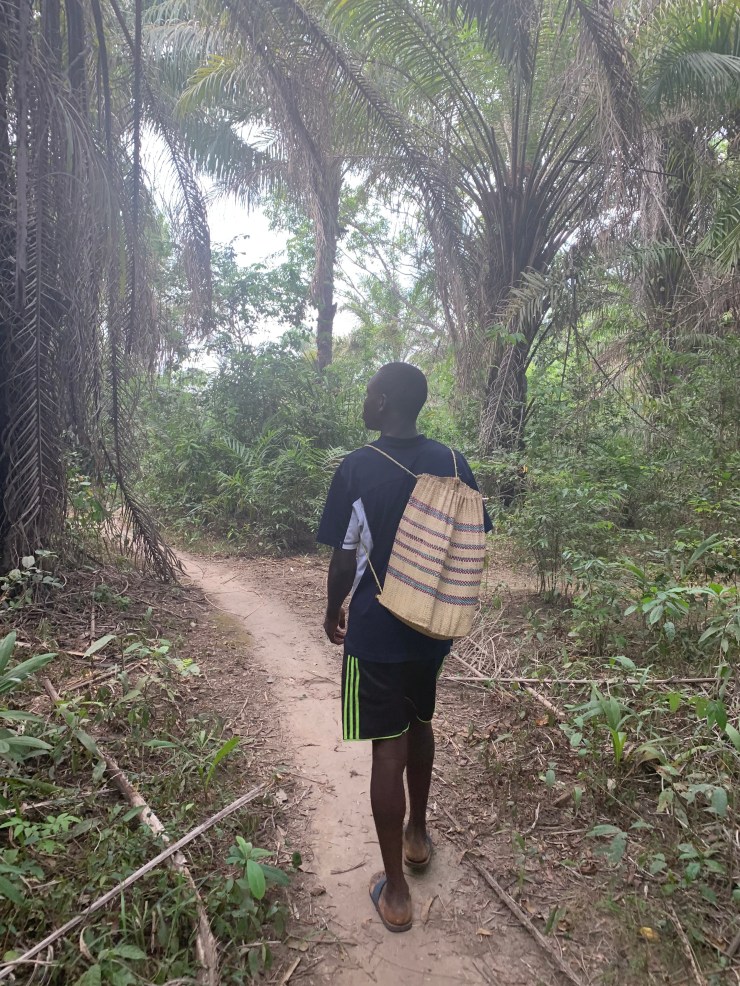
In Rogbonko, they specialize in basket weaving. They use part of the palm frond. It is woven on looms like cloth and made into bags. There is another style of basket making for bowls and round containers that be used to store or to attach a strap and carry like a purse.
 Jill’s Adventure in Sierra Leone
Wow beautiful cloth and baskets . It’s great that you got to see the whole process .
Sounds like a nice long and beautiful hike too !!
LikeLike